Deep tissue vs Swedish massage: which one does your body actually need?
You’re looking at a treatment menu. Two options stand out: deep tissue and Swedish massage. Both promise relaxation. Both cost roughly the same. And neither website ever quite explains which one your body actually needs.
Here’s the honest answer.
The quick answer
Swedish massage uses long, flowing strokes at moderate pressure to relax the whole body and improve circulation — ideal for general tension and first-timers. Deep tissue massage uses firm, targeted pressure to reach deeper muscle layers — ideal for chronic tension, specific pain, and post-activity recovery. Neither is objectively “better.” The right choice depends on what your body needs right now.
Want the full picture? Keep reading. Want to book and figure it out with a therapist directly? Skip to booking →
What is Swedish massage?
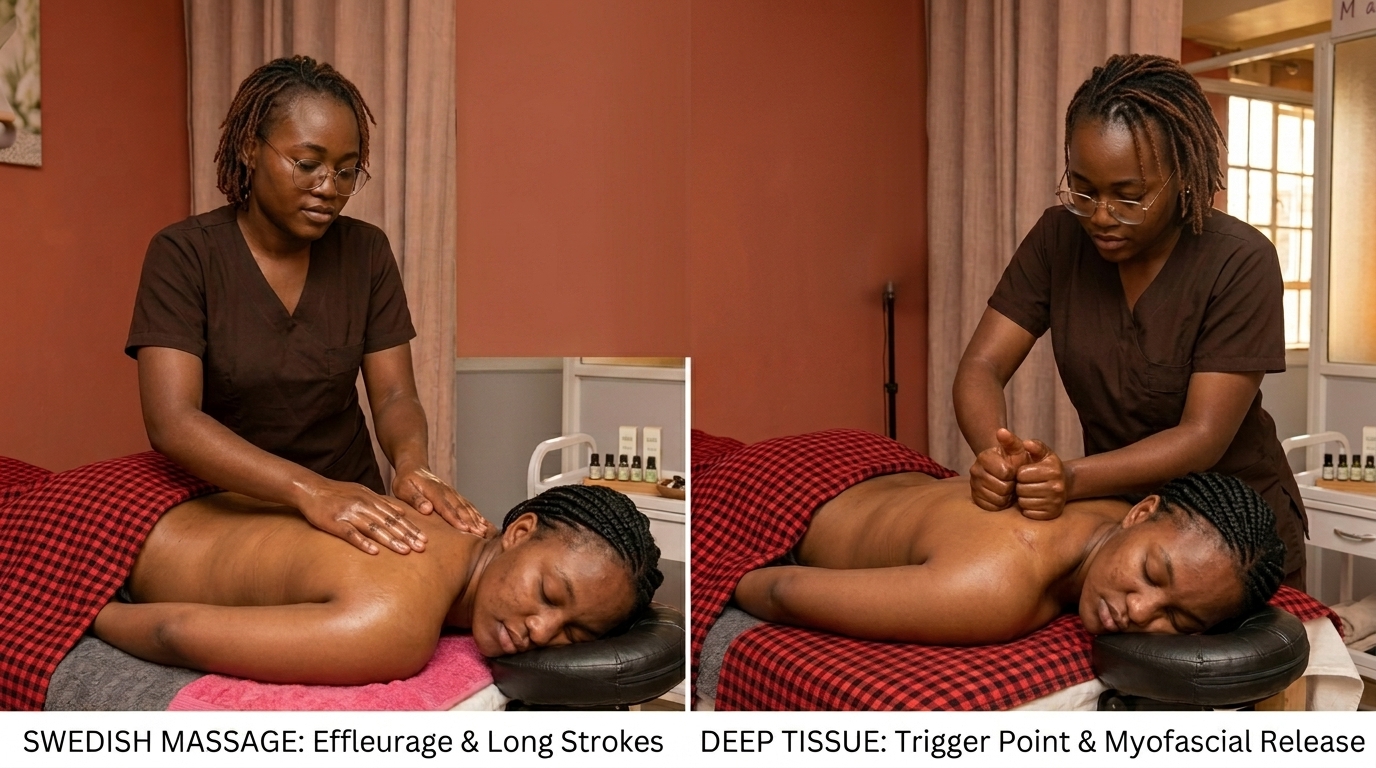
Swedish massage is the foundational Western massage technique long, gliding strokes (effleurage), kneading (petrissage), and circular friction movements applied at light to moderate pressure across the full body.
The sensation is smooth and flowing. Strokes move continuously rather than focusing intensely on one spot, which is why most clients describe it as deeply relaxing rather than intense. It is the massage equivalent of a long exhale.
The physiological effects are real and well-documented: improved circulation, reduced general muscle tension, activation of the parasympathetic nervous system, the rest-and-repair mode your body rarely reaches on its own, and improved lymphatic drainage.
Swedish massage is best for: first-time massage clients, general stress and tension, anyone who finds firm pressure uncomfortable, and full-body relaxation when nothing specific is wrong, you just need to unwind completely.
What is deep tissue massage?
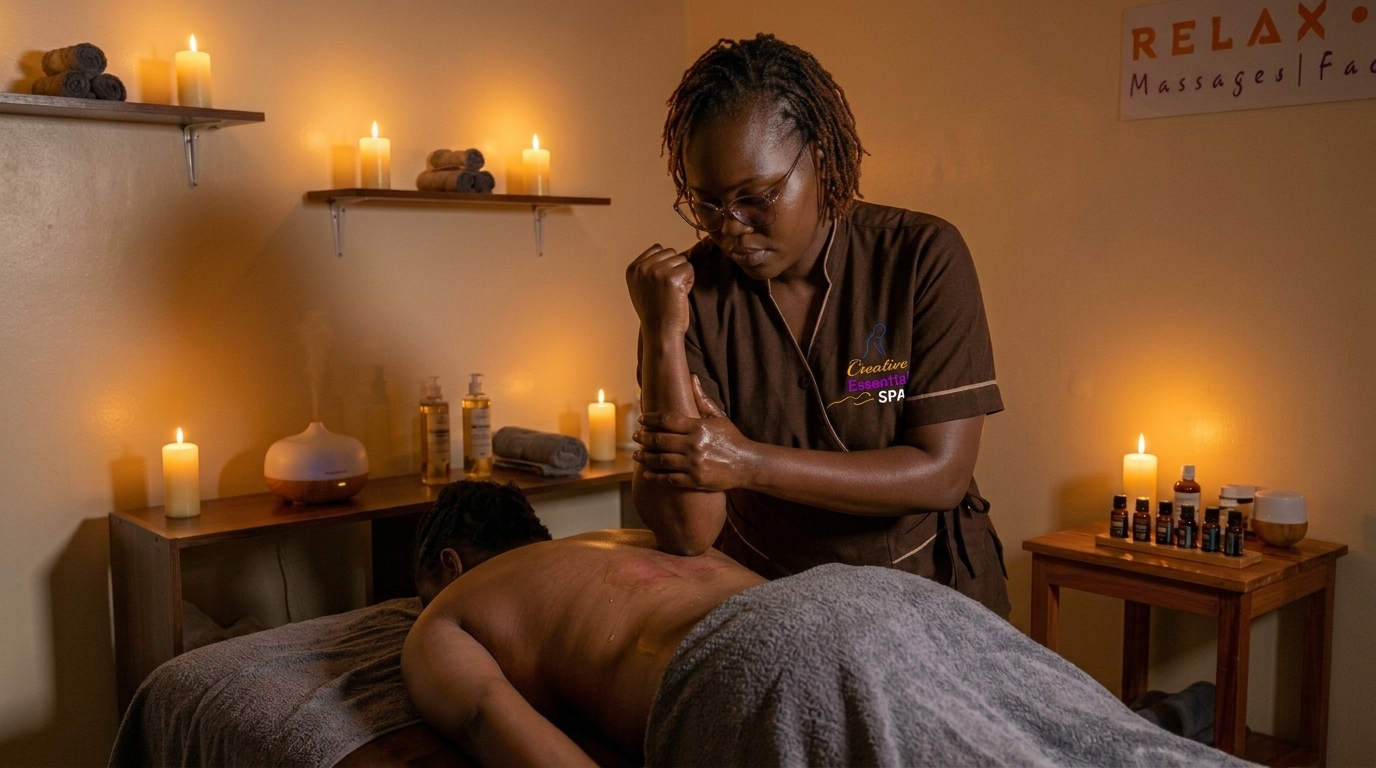
Deep tissue massage uses slower strokes and firmer, more sustained pressure to reach the deeper layers of muscle and the fascia, the connective tissue surrounding muscles that often holds onto tension long after the muscle itself has relaxed.
The sensation is more targeted and intense than that of a Swedish massage. Therapists work specific problem areas with sustained pressure rather than continuous full-body strokes. Some moments can feel uncomfortable, particularly over genuinely tight or knotted tissue, but this should never cross into sharp, breath-holding pain. We'll come back to this distinction properly, because it's the question most people are actually asking when they hesitate over this treatment.
The physiological effects: deep tissue work breaks down adhesions and scar tissue, releases chronic muscle tension that's been held for weeks or months, improves blood flow to deep tissue layers, and reduces inflammation in overworked muscles.
Deep tissue massage is best for: chronic muscle tension, specific pain points, post-activity recovery (hiking, sports, physical labour), and anyone whose problem is in a specific location rather than generalised throughout the body.
Pressure is always adjustable, and communicating with your therapist throughout the session is expected, not an interruption.
Side-by-side comparison
| Factor | Swedish Massage | Deep Tissue Massage |
|---|---|---|
| Pressure | Light to moderate | Firm, sustained |
| Stroke style | Long, flowing, continuous | Slower, targeted, focused |
| Best for | General relaxation, first-timers | Chronic tension, specific pain |
| Sensation | Smooth, soothing | Intense in problem areas, never sharp pain |
| Post-activity recovery | Good for general fatigue | Best for muscle-specific soreness |
| Stress relief | Excellent | Good, but more physical than emotional |
| First massage recommendation | Yes — ideal starting point | Only if a specific issue is known |
| Duration options | 60 / 90 minutes | 60 / 90 minutes |
| Can be combined | Yes — within one session | Yes — within one session |
Which one should you get?
The honest answer depends on what's actually going on with your body right now. Here's how to think it through.
"I've never had a massage before, and I'm a little nervous." → Swedish massage. It's the gentlest introduction to professional massage, moderate pressure, full-body, deeply relaxing. It's very unlikely to feel uncomfortable, and it gives you a baseline to compare future treatments against.
"I just finished a big hike (or workout), and my muscles are properly sore." → Deep tissue massage. It specifically targets the muscle layers that accumulate soreness from sustained physical exertion, flushing lactic acid, and reducing inflammation more effectively than Swedish for this kind of fatigue. (See our full post-hike recovery guide if this is you after Hell's Gate.)
"I carry a lot of stress and just want to switch my brain off." → Swedish massage — excellent for general stress relief. If your stress feels like it has settled into your body as much as your mind, aromatherapy massage adds a nervous-system layer that Swedish alone doesn't address.
"I have a specific knot or chronic tight spot — my shoulder, my lower back, my neck." → Deep tissue massage. It's built for exactly this. The sustained, targeted pressure reaches the specific muscle layer where chronic tension lives, in a way that lighter, full-body Swedish strokes generally can't resolve on their own.
"I bruise easily or am sensitive to firm pressure." → Swedish massage. If firm pressure is genuinely uncomfortable for you, Swedish delivers excellent relaxation and circulation benefits without the intensity. You can always discuss a gentler deep tissue session in the future once you have a baseline.
"I honestly don't know — I just want to feel better." → Tell your therapist exactly that. This is normal, and it's exactly what the consultation at the start of every session is for. Describe how you feel tired, stressed, sore, tense, and your therapist will recommend the right treatment, or blend elements of both within a single session.
Can you combine deep tissue and Swedish in one session?
Yes — and this is worth knowing if you're still torn.
Many massage sessions blend both techniques within a single 60 or 90-minute treatment: Swedish strokes to warm and relax the body generally, deep tissue work focused on one or two specific problem areas. This is a completely normal request, not a special arrangement. Simply tell your therapist at the start of the session — "mostly relaxing, but please work on my shoulders specifically" — and a good therapist will build the session around exactly that.
This hybrid approach is often the right call for anyone who wants general relaxation but knows they're carrying tension somewhere specific, too.
Is deep tissue massage supposed to hurt? Being honest about pressure
This is the question underneath most of the hesitation people feel about deep tissue massage, so let's be straightforward about it.
Deep tissue massage can feel intense, particularly over areas of genuine chronic tension. This is sometimes described as a "good hurt," similar to a deep stretch. It should never cross into sharp, breath-holding pain. If it does, that's the signal to ask for lighter pressure immediately.
Pressure is fully adjustable throughout the session at any time. Communicating with your therapist — "a little lighter please," "that's perfect," "can you go firmer here" — is expected and welcomed, not awkward.
Some mild soreness in the 24 hours following a deep tissue session is normal, similar to post-exercise soreness, and typically resolves within a day. If you're unsure where to start, ask for moderate pressure and have your therapist increase it gradually. You are always in control of the session — not the other way around.
Booking at Creative Essential Spa, Naivasha
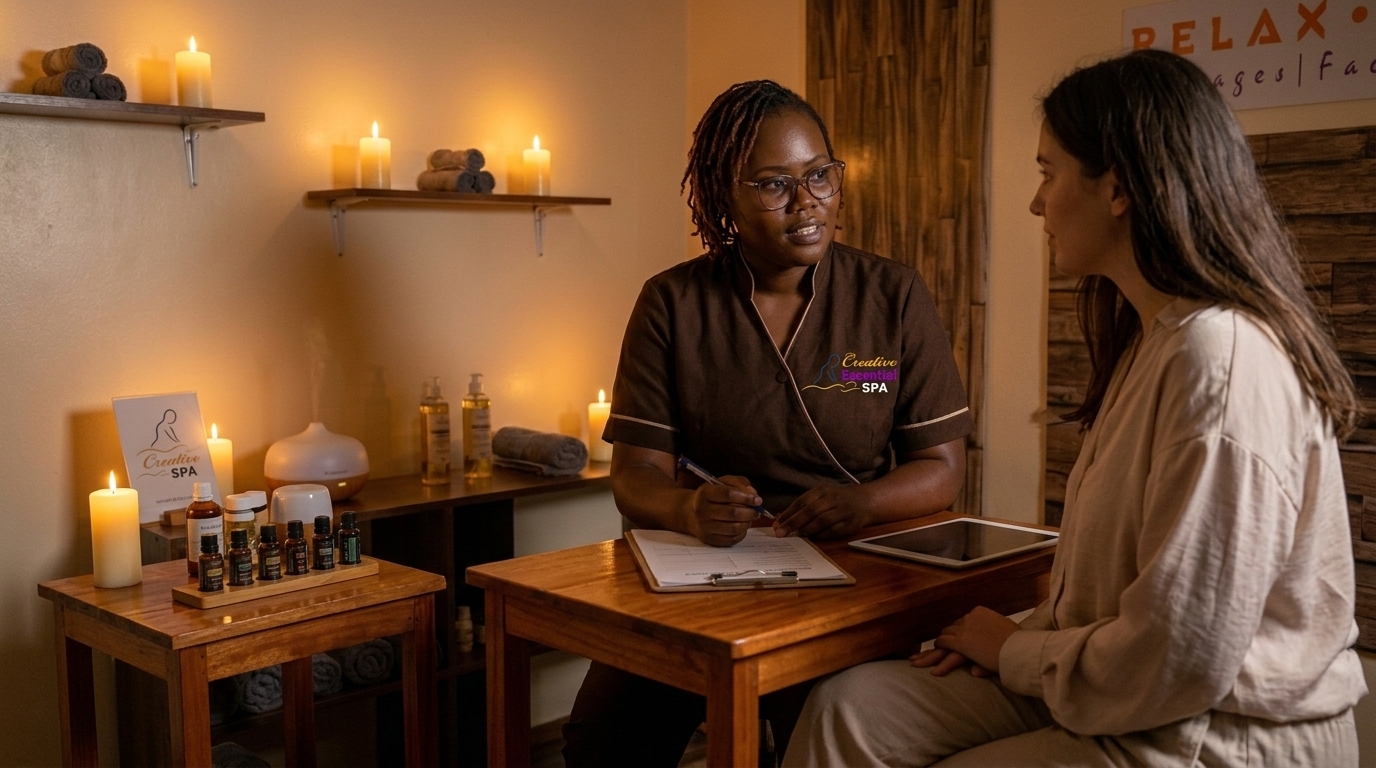
Both Swedish and deep tissue massage are available at Creative Essential Spa in Naivasha, in 60 and 90-minute sessions, in-spa or via mobile delivery to your hotel, lodge, villa, or Airbnb.
Every session begins with a brief consultation. Describe what you’re feeling, and your therapist will confirm the right treatment — or recommend the hybrid approach described above. If you’re booking after a Hell’s Gate hike specifically, our recovery guide has detailed treatment timing recommendations.
Book Swedish or Deep Tissue massage → WhatsApp us if you’re still deciding → · +254 723 234 922
Frequently asked questions
What is the difference between deep tissue and Swedish massage?
Swedish massage uses long, flowing strokes at moderate pressure for full-body relaxation and improved circulation. Deep tissue massage uses slower, firmer, more targeted pressure to reach deeper muscle layers and address chronic tension or specific pain. Swedish is gentler and better for first-timers; deep tissue is more intense and better for specific muscular problems.
Which massage is better for sore muscles?
Deep tissue massage is generally better for sore muscles, particularly after physical activity like hiking or exercise. It targets the specific muscle layers where soreness and lactic acid accumulate. For general full-body fatigue without specific problem areas, Swedish massage is also effective and gentler.
Which massage is better for stress and relaxation?
Swedish massage is the most reliably relaxing option for general stress, using continuous flowing strokes that calm the nervous system. For deeper stress that has settled into the body, aromatherapy massage adds essential oils that work directly on the nervous system alongside the physical relaxation.
Is deep tissue massage supposed to hurt?
Deep tissue massage can feel intense over areas of genuine muscle tension, sometimes described as a “good hurt” similar to a deep stretch, but it should never cross into sharp pain. Pressure is fully adjustable throughout the session — tell your therapist if you want it lighter or firmer at any point.
Can I ask for less pressure during a deep tissue massage?
Yes. Pressure during a deep tissue massage is always adjustable, and communicating with your therapist throughout the session is expected, not awkward. A good therapist will check in regularly, but you can speak up at any time if you want the pressure adjusted.
Should I get deep tissue or Swedish massage after hiking?
Deep tissue massage is generally the better choice after a demanding hike, as it targets the specific muscle groups — quads, calves, hamstrings, lower back — that accumulate soreness from sustained exertion. For lighter activity or general fatigue, Swedish massage is also effective. See our complete post-hike recovery guide for detailed recommendations.
Can you combine deep tissue and Swedish massage in one session?
Yes. Many massage sessions blend both techniques — Swedish strokes for general relaxation across the body, with deep tissue work focused on one or two specific problem areas. Simply tell your therapist what you’re looking for at the start of the session.
There’s no wrong choice here
Only the right one for what your body needs today. If you’re still not sure, that’s exactly what the consultation is for. We’ll figure it out together.
Book at Creative Essential Spa → WhatsApp us — same-day and mobile bookings →
Creative Essential Spa is Naivasha’s leading massage and wellness spa, offering Swedish, deep tissue, aromatherapy, Banesh, couples, and prenatal massage — in-spa and via mobile service across the Naivasha area. Open Monday–Saturday 8:30am–8:00pm, Sunday 11:00am–5:00pm.