Essential oils guide: which aromatherapy blend is right for your mood and health
Most people own more essential oils than they actually use.
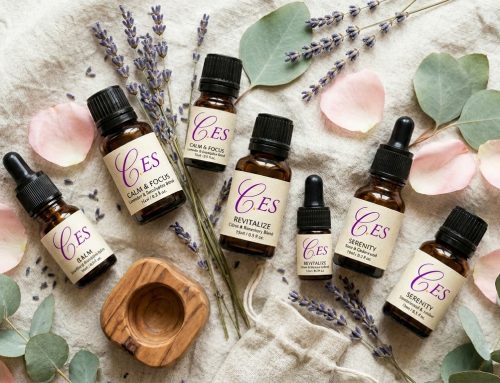
A bottle from a gift set. Something a friend recommended. One that smelled good in a shop. They sit on a shelf, mostly unopened, because nobody ever explained clearly what any of them are actually for.
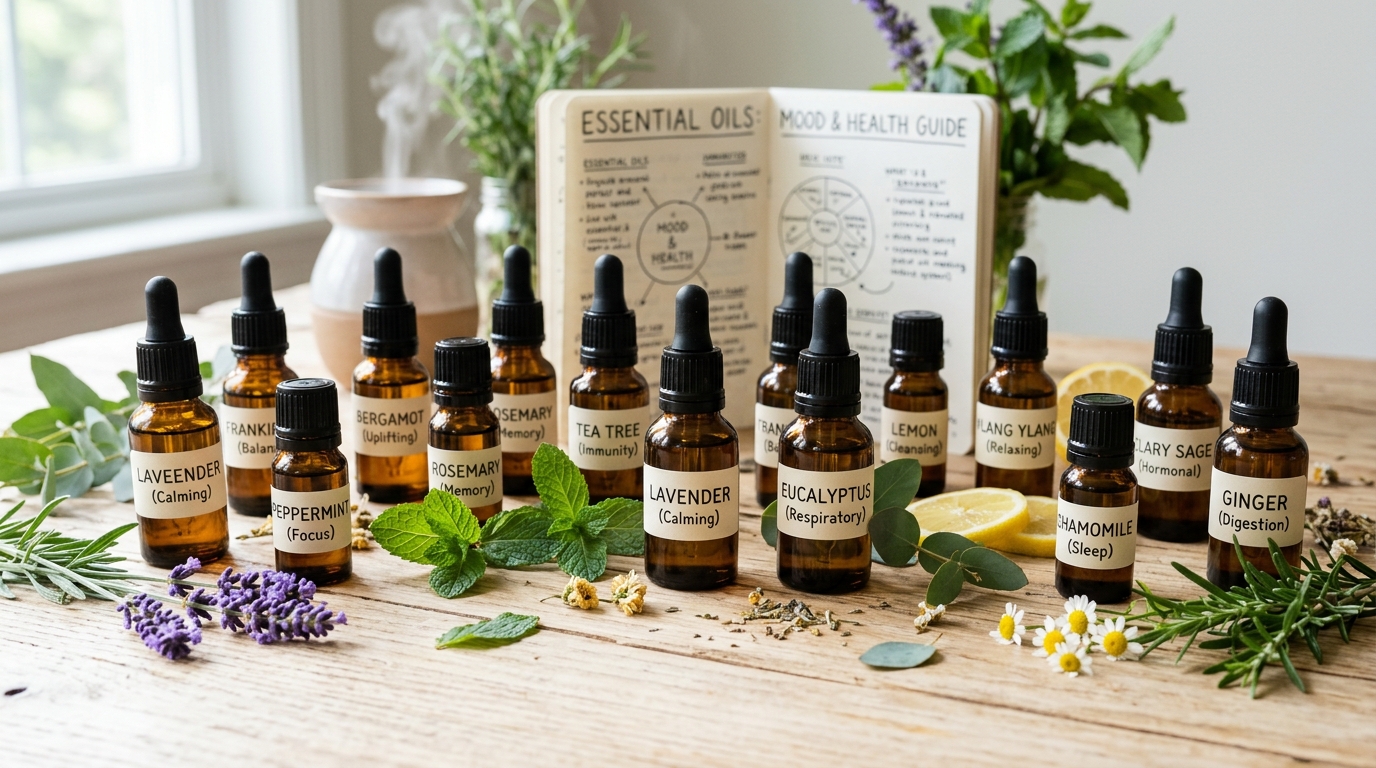
This guide fixes that. Below is a quick matrix matching common moods and health needs to the right oil, followed by real detail on the eight oils that matter most, how to use them safely, and what they can and can’t actually do.
Quick guide: which oil for which mood or need
| Mood or need | Recommended oil(s) | Why |
|---|---|---|
| Anxiety / feeling overwhelmed | Lavender, Frankincense | Activates calming GABA pathways and grounds a racing mind |
| Can’t sleep / restless nights | Lavender, Chamomile | Supports melatonin production and physical relaxation |
| Low energy / need to wake up | Peppermint, Sweet Orange | Stimulates alertness without overstimulating |
| Can’t focus / mental fog | Rosemary, Peppermint | Supports mental clarity and cognitive alertness |
| Low mood / need lifting | Sweet Orange, Bergamot | Citrus oils are consistently linked to mood elevation |
| Muscle tension / physical stress | Eucalyptus, Peppermint | Cooling, anti-inflammatory, analgesic on sore muscles |
| Romantic / intimate mood | Rose, Jasmine, Ylang Ylang | Warm, floral profile associated with emotional openness |
| Need grounding / feeling scattered | Frankincense, Cedarwood | Deep, resinous, woody notes support a meditative state |
| Headache | Peppermint | Menthol has a cooling, localised analgesic effect at the temples |
| Nausea | Ginger, Peppermint | Both are commonly used to settle digestive discomfort |
How to read this guide
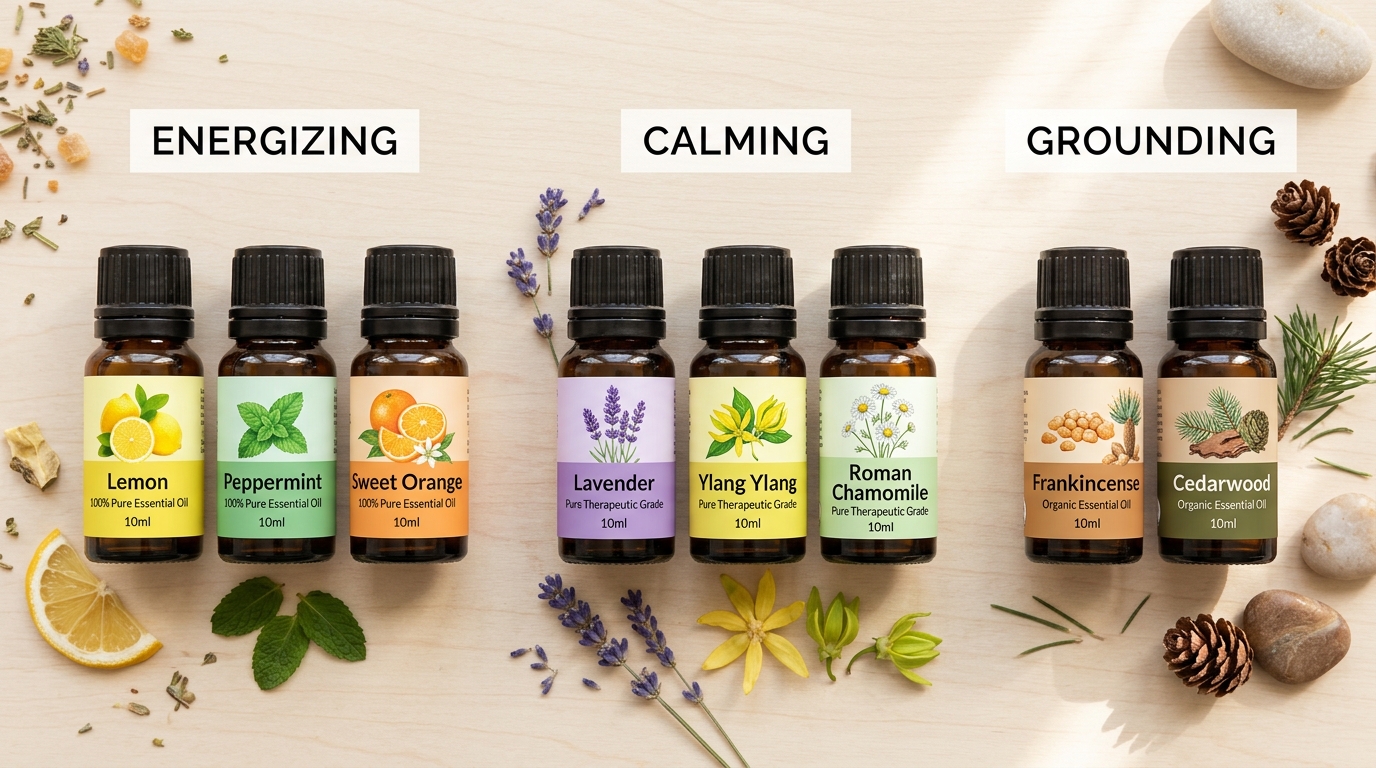
The oils below are organised across a simple spectrum: energizing oils that lift and stimulate, calming oils that soothe and relax, and grounding oils that centre and stabilise.
Most people need different oils on different days; the same person might reach for peppermint on a sluggish Monday morning and lavender on an anxious Sunday night. None of this is exact science in the way a medication is, but the patterns below are well-established and worth taking seriously.
The essential oils guide — 8 oils, what they actually do
💜 Lavender — Lavandula angustifolia — CALMING
The most versatile calming oil available. Lavender activates GABA receptors — the same pathway targeted by some anti-anxiety medications, but gently and non-pharmacologically.
For mood: Widely used for anxiety and general nervous system regulation. For health: Commonly used to support sleep quality and reduce general tension. Caution: Generally very well tolerated; a small minority experience mild skin sensitivity with undiluted direct contact.
🌿 Eucalyptus — Eucalyptus globulus — ENERGIZING
Sharp and clarifying, eucalyptus clears mental fog and supports alertness through its distinctive opening aroma.
For mood: Cuts through sluggishness and mental haze. For health: Commonly used for respiratory support and as an analgesic for sore, overworked muscles. Caution: Avoid near infants and young children; can be irritating at high concentrations.
🍊 Sweet Orange — Citrus sinensis — ENERGIZING
One of the most reliably mood-lifting oils — bright, uncomplicated, and rarely disliked by anyone.
For mood: Consistently associated with reduced anxiety and gentle energising without overstimulation. For health: A dependable everyday oil with few drawbacks. Caution: Citrus oils increase skin sensitivity to sunlight — avoid direct sun exposure after topical application.
🌱 Peppermint — Mentha piperita — ENERGIZING
Sharp and immediate, the fastest-acting oil for alertness and mental clarity.
For mood: Wakes up a sluggish mind faster than almost anything else on this list. For health: Widely used for headache relief, nausea, and muscular cooling. Caution: Strong and concentrated; always dilute, and keep away from the eyes and broken skin.
🌳 Frankincense — Boswellia sacra — GROUNDING
The deepest grounding oil in common use, associated with meditative calm rather than immediate relaxation.
For mood: The choice when you feel scattered rather than simply tired or stressed. For health: Used for anti-inflammatory support and as part of chronic stress management routines. Caution: Generally very well tolerated, among the gentlest oils available.
🪵 Cedarwood — Cedrus atlantica — GROUNDING
Woody and stabilising, cedarwood is associated with a settled, centred state of mind.
For mood: A quiet, steady grounding effect rather than a dramatic one. For health: Sometimes paired with lavender to support sleep onset. Caution: Generally safe; avoid during pregnancy without professional guidance.
🌼 Chamomile — Anthemis nobilis — CALMING
The gentlest calming oil on this list, particularly effective for high anxiety states and overstimulated nervous systems.
For mood: A soft landing for anyone who finds other calming oils too strong. For health: Anti-inflammatory, and widely used to support sleep and calm irritated skin. Caution: One of the safest oils available, including for sensitive skin.
🌿 Rosemary — Rosmarinus officinalis — ENERGIZING
Sharp and herbaceous, rosemary is specifically associated with memory and cognitive alertness.
For mood: The one to reach for when you need to think clearly, not just wake up. For health: Traditionally used to support mental focus and circulation. Caution: Avoid during pregnancy and with epilepsy or seizure disorders without medical guidance.
How to use essential oils
Diffusing is the most common home method. Add a few drops to a water-based diffuser, effective for mood and atmosphere, though generally milder than direct application.
Topical application should always involve diluting the essential oil in a carrier oil first; sweet almond, jojoba, or fractionated coconut oil are all good choices. A typical adult dilution is 2–3%, roughly 10–15 drops of essential oil per 30ml of carrier oil.
In the bath, a few drops mixed into a carrier oil or unscented bath dispersant, added to the water, works well. Never add undiluted oil directly to bathwater; it will float on the surface and contact skin at full concentration, which can irritate.
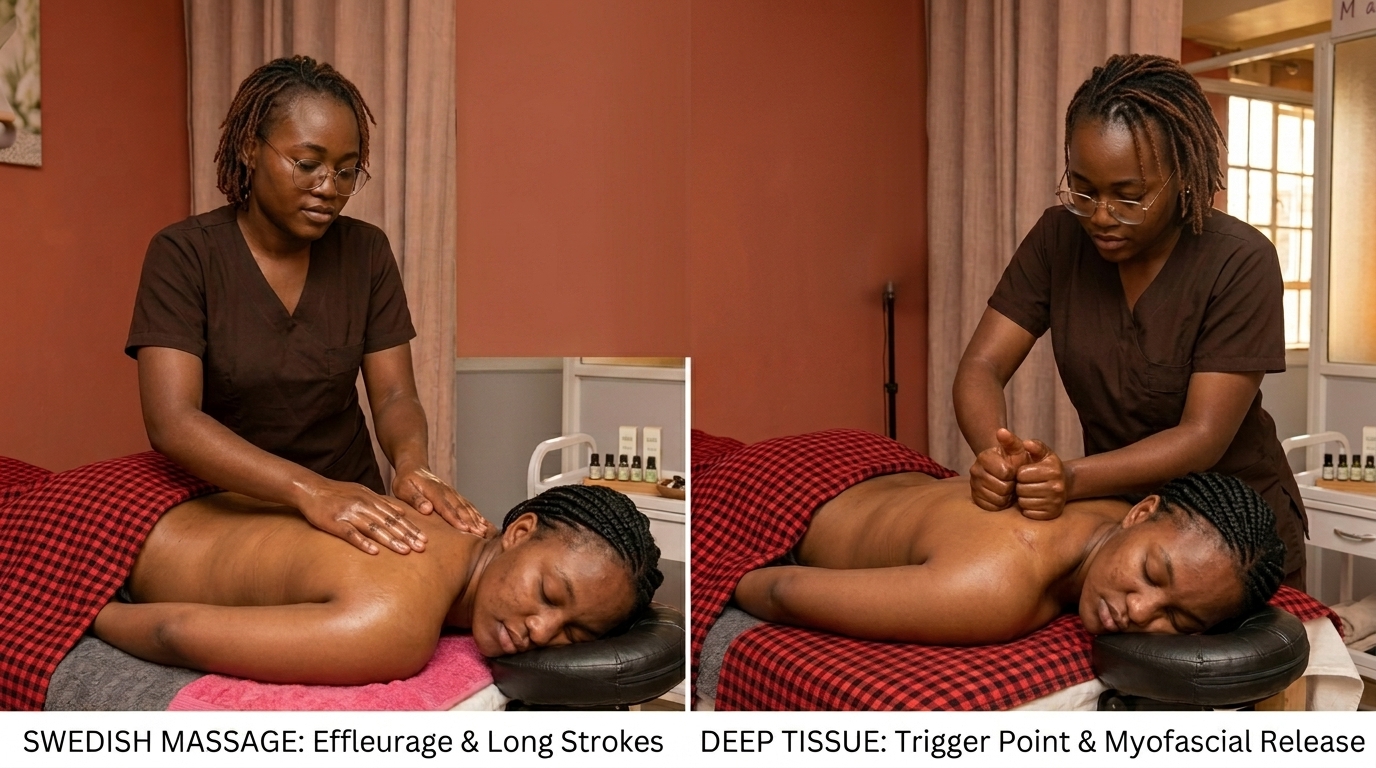
Professional massage combines the physical technique of massage with correctly diluted, therapeutically applied oils, producing effects that diffusing or casual topical use alone can’t replicate. Touch and scent working through two pathways simultaneously is a genuinely different experience, not just a more concentrated version of the same thing.
Essential oil safety — what to know before you use them
Always dilute essential oils in a carrier oil before applying to skin. Undiluted (“neat”) application is a common cause of skin irritation and sensitisation over time.
Pregnancy: several common essential oils, including rosemary and certain concentrations of peppermint, are generally advised against during pregnancy. If you’re pregnant, see our full guide to prenatal massage and essential oil safety before using any oils, and consult your doctor if you’re unsure about anything specific.
Children and infants: many oils that are perfectly safe for adults aren’t appropriate for young children; eucalyptus and peppermint in particular are generally avoided around infants. Research any oil specifically before using it near children.
Pets: several essential oils, particularly tea tree and certain citrus oils, are toxic to cats specifically. Research pet safety before diffusing around animals in the home.
Patch test: before full use of any new oil, apply a small diluted amount to the inner forearm and wait 24 hours to check for a reaction.
Quality matters: oil purity and concentration vary significantly between brands. Poor-quality or adulterated oils are more likely to cause skin reactions and are less reliable in their effects than genuine, well-sourced ones.
When to bring in a professional
Home use diffusing, a diluted personal blend is genuinely effective for daily mood support and general wellbeing. It’s a real and valid way to use these oils.
A trained therapist adds something home use simply can’t: the physical technique of massage combined with a blend chosen specifically for your state that day, applied with training in exactly where and how pressure and oil should meet.
At Creative Essential Spa in Naivasha, every aromatherapy massage session begins with exactly this kind of conversation — what you’re feeling, what oil responds to that, and a treatment built around the answer, not a fixed menu item.
→ Read our full guide to aromatherapy massage at Creative Essential Spa
Booking a professional aromatherapy session in Naivasha
Creative Essential Spa offers professional aromatherapy massage in-spa in Naivasha Town and via mobile service across the area. Every session begins with a conversation about your mood and needs; the right blend is chosen together, not assumed.
Book your session → WhatsApp us → · +254 723 234 922
Frequently asked questions
What essential oil is best for anxiety?
Lavender is the most widely used and well-supported essential oil for anxiety, working through the same GABA receptor pathway targeted by some anti-anxiety medications, but gently. Frankincense is a good alternative for a more grounding, meditative effect. Both are considered generally safe for most adults when properly diluted.
What essential oil helps you sleep?
Lavender is the most researched essential oil for sleep support, commonly paired with chamomile for an even gentler calming effect. Diffusing in the bedroom or using a properly diluted topical blend before bed are the most common methods.
Which essential oil is best for energy and focus?
Peppermint is the fastest-acting oil for alertness and mental clarity, while rosemary is specifically associated with memory and cognitive focus. Sweet orange is a gentler energising option that lifts mood without peppermint’s sharper stimulation.
Can essential oils actually improve your mood?
Yes, to a meaningful degree, essential oils act on the limbic system via the olfactory pathway, which is directly connected to the brain’s emotional processing centres. The effect is real but generally modest and short-term on its own; it works best combined with other wellness practices rather than as a sole intervention.
Is it safe to use essential oils every day?
For most healthy adults, daily use of properly diluted essential oils through diffusing or diluted topical application is generally considered safe. Rotating oils rather than using the same one continuously is often recommended, and anyone with sensitive skin, a medical condition, or who is pregnant should take extra care and seek specific guidance.
What essential oils should I avoid during pregnancy?
Several common oils, including rosemary and certain concentrations of peppermint, are generally advised against during pregnancy. For full, pregnancy-specific guidance, see our complete guide to prenatal massage and essential oil safety, and always consult your doctor if you’re unsure.
What is the difference between essential oils and fragrance oils?
Essential oils are natural compounds extracted directly from plants and carry genuine aromatherapeutic properties. Fragrance oils are typically synthetic, created purely for scent, without the therapeutic compounds found in true essential oils. For aromatherapy purposes specifically, only genuine essential oils are appropriate.
The right oil at the right moment does something simple and real
It changes how a room feels, and how you feel in it.
Start with the matrix above. Trust what you’re drawn to. And if you ever want it done properly — by someone trained to match the right blend to exactly what you’re carrying that day — we’re here.
Explore aromatherapy massage at Creative Essential Spa → WhatsApp us →
Creative Essential Spa is Naivasha’s leading massage and wellness spa, offering professional aromatherapy massage in-spa and via mobile service across the Naivasha area. Open Monday–Saturday 8:30am–8:00pm, Sunday 11:00am–5:00pm.