
Office worker’s guide to back and neck pain: when massage helps more than painkillers
You know the one.
The tightness that starts somewhere around 3pm, when you’ve been looking at a screen for six hours. The neck that won’t turn fully to the right. The lower back that makes standing up from your chair feel like a small announcement. You’ve taken the paracetamol. It works for a few hours. Then it comes back.
This is not weakness, and it’s not something wrong with you specifically. It’s a predictable, mechanical response to a specific set of physical conditions — and it’s worth understanding exactly what’s happening, because the solution most people reach for isn’t actually addressing the cause.
Why desk work causes back and neck pain — the structural explanation
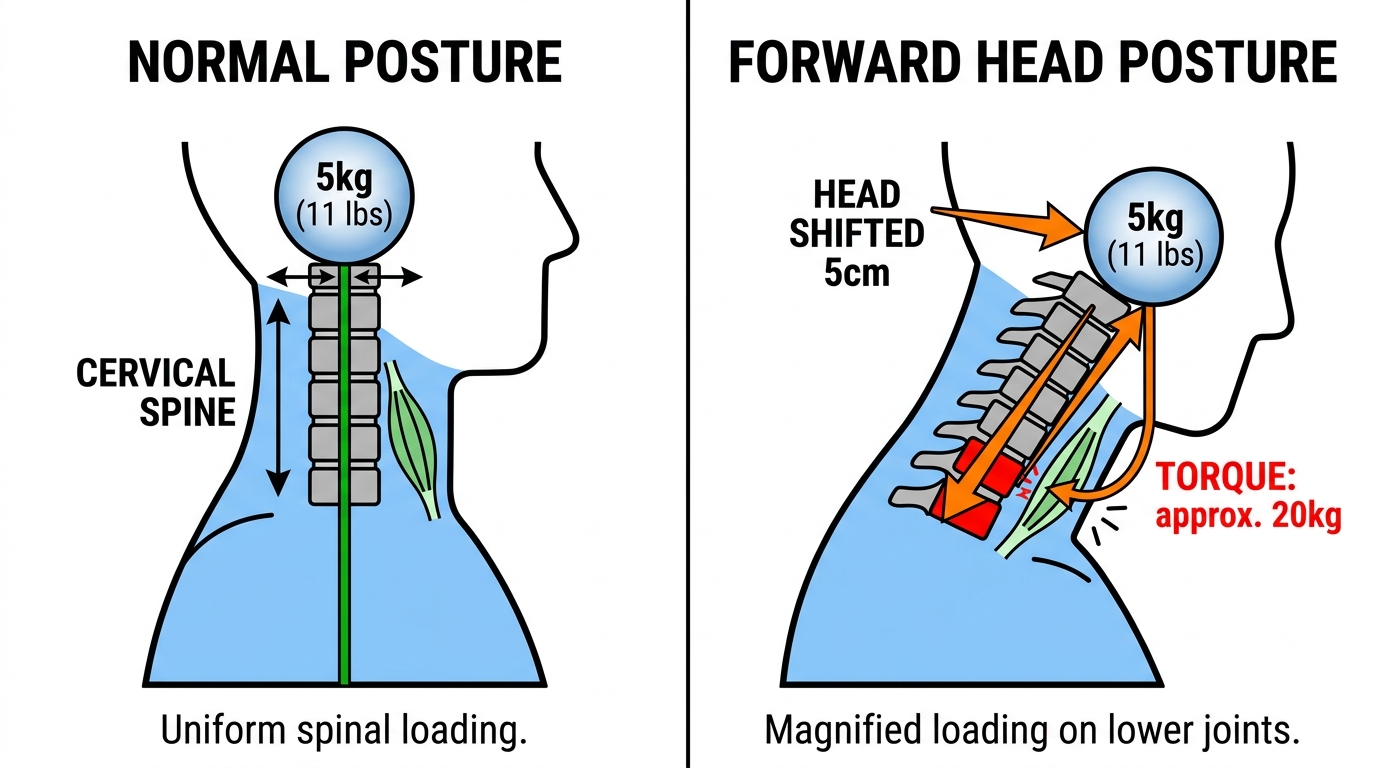
The average human head weighs 5–6kg. For every inch it sits forward of the spine, which it does, reliably, when you’re looking at a screen, the effective load on the cervical spine and the trapezius muscle increases by roughly 5kg. A head held in a typical desk posture can exert 12–18kg of effective load on the neck. All day. Every day.
Here’s the part that surprises most people: sustained static posture is often more damaging to muscle tissue than heavy physical work. Heavy lifting taxes a muscle maximally and then releases it. Desk work keeps muscles in sustained partial contraction for six to eight hours with almost no rest in between.
Muscle held in partial contraction for that long develops myofascial trigger points, localised, hyper-irritable spots within the muscle fibre that cause both local tightness and referred pain to distant sites. The tension headache that shows up reliably in the afternoon often originates not in the head at all, but in the suboccipital muscles at the base of the skull.
Sitting also shortens the hip flexors over time, which tilts the pelvis forward and increases the load on the lumbar spine, which is why lower back pain is common in desk workers who never lift anything heavier than a laptop bag.
None of this means anything is structurally damaged. It’s a mechanical response to a specific set of conditions. And it’s reversible.
Why painkillers don’t fix the problem (and when they do help)
Painkillers work. Paracetamol and ibuprofen reduce inflammation and inhibit pain signalling pathways, and they are genuinely effective at reducing the experience of pain in the short term. That’s not in question.
What they don’t do is touch the myofascial trigger points, the shortened hip flexors, or the sustained cervical loading that generated the pain signal in the first place. This is exactly why desk pain tends to come back a few hours after the medication wears off — the underlying cause was never addressed. The pain relief and the pain source are two different problems.
Painkillers are the right tool for acute injury, for a temporary flare-up, or as a bridge while a longer-term solution is being put in place. They’re not designed to be — and generally shouldn’t be — the primary long-term management strategy for chronic postural pain. This article isn’t suggesting you stop taking anything your doctor has recommended. It’s pointing at a gap: chronic desk pain has a structural cause, and structural causes need a structural intervention.
What massage actually does that painkillers don’t
Massage works through three mechanisms that are genuinely different from anything a tablet can achieve.
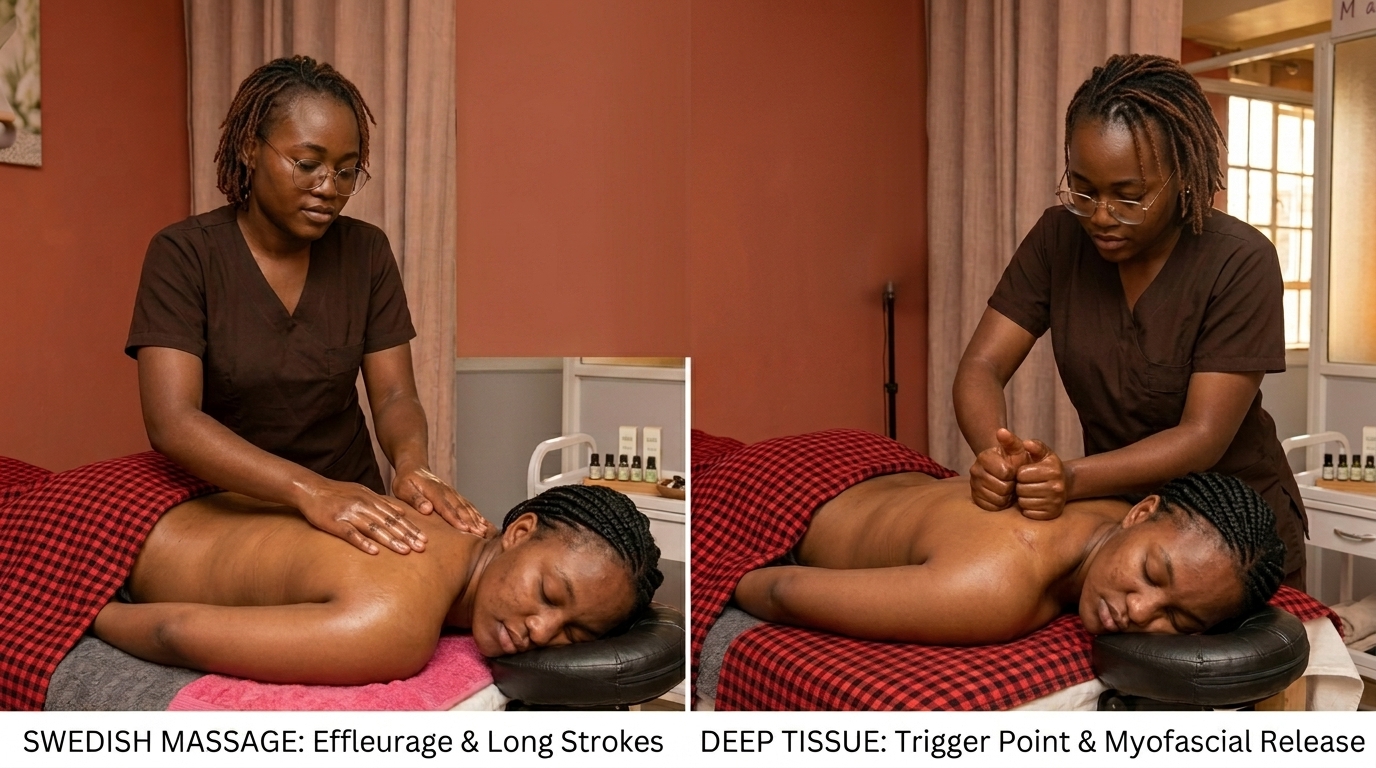
It applies direct mechanical pressure to myofascial trigger points, releasing the localised muscle contraction that no painkiller can reach. A trained therapist feels for the specific knot and works it directly — which is why clients often feel immediate, local relief the moment a trigger point releases during a session.
It improves circulation to tissue that’s become oxygen-starved. Muscle held in sustained contraction becomes hypoxic, deprived of oxygen and accumulates metabolic waste products. Massage flushes that waste and restores healthy blood flow to the area, which is part of why the tissue actually feels different afterward, not just less painful.
It downregulates the nervous system. Most desk workers with chronic pain are running on sustained low-grade sympathetic activation — the stress response — which keeps the muscular tension baseline elevated all day, every day. A good massage session interrupts that cycle for 24 to 48 hours. Regular sessions lower the baseline itself, not just the daily spike.
These effects are cumulative. A desk worker who’s been in pain for two years won’t feel fully resolved after one session — but a regular programme of massage produces measurable, sustained reduction in chronic tension over time, in a way that a single dose of anything cannot.
Painkillers vs massage for desk pain — direct comparison
| Factor | Painkillers | Therapeutic massage |
|---|---|---|
| Works on pain signal | Yes — reduces sensation | Indirectly — by removing the cause |
| Works on muscle tension | No | Yes — directly releases trigger points |
| Works on posture patterns | No | Partially — combined with stretching/awareness |
| Speed of relief | Fast (30–60 minutes) | Moderate (during and after session) |
| Duration of relief | Hours (symptom returns) | Days to weeks (cause addressed) |
| Cumulative benefit | None — each dose independent | Yes — effects build with regular sessions |
| Best for acute pain | Yes — best use case | Not primarily |
| Best for chronic postural pain | Symptom management only | Addresses root cause |
| Side effects | Liver/GI load with sustained use | Mild post-session soreness |
| When to use | Acute flare-up, temporary relief | Chronic tension, regular maintenance |
The honest conclusion: painkillers and massage aren’t opposites. Painkillers are the right tool for acute pain. Massage is the right tool for chronic postural tension. Many desk workers need both, but most are only using one.
Which treatment should you book?
If you have: neck tightness and restricted rotation Root cause: sustained cervical loading from forward head posture, with the trapezius and levator scapulae held in chronic partial contraction. Treatment: Banesh Massage — 60 minutes, focused entirely on the back, neck, and shoulders, where this tension concentrates.
If you have: tension headaches arriving in the afternoon Root cause: suboccipital trigger points at the base of the skull, referring pain into the head — usually from sustained upper trapezius contraction, not anything happening in the head itself. Treatment: Banesh Massage — 60 minutes, working the base of the skull and shoulders directly.
If you have: lower back ache, especially after 3–4 hours sitting. Root cause: hip flexor shortening causing anterior pelvic tilt and increased lumbar load, often combined with glute inhibition from prolonged sitting. Treatment: Deep Tissue Massage — 60 or 90 minutes, targeting the lumbar region, hip flexors, and glutes.
If you have: general full-body tension, fatigue, and low-grade stress. Root cause: sympathetic nervous system dysregulation from sustained screen time and cognitive load — diffuse tension without one specific epicentre. Treatment: Swedish Massage or Aromatherapy Massage — 60 or 90 minutes, full-body relaxation with a nervous system reset.
Not sure which applies to you? See our deep tissue vs Swedish comparison guide for more details, or simply describe your symptoms to your therapist at the start of the session.
How often should you get a massage if you work at a desk?
For active chronic pain — tension headaches, restricted movement, or daily aching right now — every two weeks for the first six to eight weeks is what it typically takes to break an accumulated pattern. After that, monthly maintenance holds the gains.
For desk workers without current pain symptoms, once a month is the minimum frequency that produces lasting prevention. Think of it in the same category as gym membership or physiotherapy — maintenance, not luxury.
If you also exercise regularly, note that the muscle groups recruited for exercise and for sustained desk posture often overlap. Combining desk work with running, for instance, tends to produce specific tension in the IT band, lower back, and hip flexors that benefits from deep tissue work every three to four weeks.
And for the days your neck is especially bad, and you can’t plan ahead, our mobile spa service means same-day sessions are available with no advance planning required.
Booking at Creative Essential Spa — in-spa or at your office
Creative Essential Spa offers all four recommended treatments in-spa in Naivasha Town, in 60 and 90-minute sessions, with same-day bookings available via WhatsApp.
For corporate teams and workplaces: our mobile spa service delivers treatments directly to an office or meeting room. Multiple therapists can be coordinated for team wellness days or a rotation of lunch-break sessions.
For home workers who’d rather not drive after a session: mobile service covers homes, apartments, and Airbnbs across Naivasha.
Not sure whether your tension has reached the point where a massage would help? See our 10 signs your body needs a massage guide.
Book your session → WhatsApp us → · +254 723 234 922
A note on medical advice
This article is written for general informational purposes and does not constitute medical advice. If you are experiencing acute injury, nerve-related symptoms (numbness, tingling, or radiating pain), or pain that has not been assessed by a medical professional, please consult your doctor before booking a massage. Therapeutic massage complements, and does not replace, professional medical care.
Frequently asked questions
Is massage better than painkillers for back pain?
For chronic back pain caused by sustained desk posture, massage addresses the root cause in a way that painkillers do not. Painkillers reduce the sensation of pain without affecting the myofascial tension causing it, which is why desk pain returns once the medication wears off. Massage directly releases trigger points, improves circulation, and resets the nervous system. Both have a role: painkillers for acute flare-ups, and massage for chronic postural tension.
Can massage help with office neck pain?
Yes. Office neck pain typically results from sustained forward head posture, loading the cervical spine and upper trapezius. Banesh massage directly releases this tension by working the myofascial trigger points responsible for restricted movement and referred headaches. Regular monthly sessions produce a lasting reduction in chronic neck tension for most desk workers.
How does massage relieve back pain?
Massage relieves back pain through three mechanisms: direct mechanical release of myofascial trigger points, improved circulation to oxygen-deprived tissue, and activation of the parasympathetic nervous system, which lowers the overall muscle tension baseline. For posture-related lower back pain specifically, deep tissue massage on the lumbar region, hip flexors, and glutes addresses the structural pattern that prolonged sitting produces.
Can massage help with chronic pain?
Yes, for chronic pain with a myofascial component, which includes most desk-related back and neck pain. Effects are cumulative: a single session provides relief, but a regular programme of monthly massage produces a measurable, sustained reduction in pain baseline over time. Massage is most effective for chronic pain when combined with postural awareness and regular movement.
How often should I get a massage for back pain?
For active chronic desk pain, every two weeks for six to eight weeks to break the accumulated pattern, then monthly for maintenance. For prevention without current symptoms, once monthly is generally sufficient. Regular massage is most effective when treated as maintenance rather than crisis management.
What type of massage is best for office workers?
It depends on the specific symptom. Banesh massage (neck, shoulders, upper back) is best for neck tension and tension headaches. Deep tissue massage is best for lower back pain and hip flexor tension from sitting. Swedish or aromatherapy massage is best for general fatigue and nervous system dysregulation from sustained screen work.
Should I see a doctor or get a massage for back pain?
If your pain includes nerve symptoms, numbness, tingling, or pain radiating down an arm or leg, was caused by a specific injury, or hasn’t been previously assessed by a medical professional, see a doctor first. For chronic tension pain from desk work with no nerve involvement, massage is an appropriate first step. When in doubt, consult your doctor. Therapeutic massage and medical care work alongside each other, not in competition.
Your neck has been trying to tell you something for a while
The paracetamol has been politely translating. There’s a better conversation available, and it only takes 60 minutes.
Book at Creative Essential Spa → WhatsApp us →
Creative Essential Spa is Naivasha’s leading massage and wellness spa, offering Banesh, deep tissue, Swedish, and aromatherapy massage — in-spa and via mobile service to homes, offices, and workplaces across Naivasha. Open Monday–Saturday 8:30am–8:00pm, Sunday 11:00am–5:00pm.